

Expanding Art: Afro-Indigenous Feminism & the Material Science of Art
Oct 23, 2026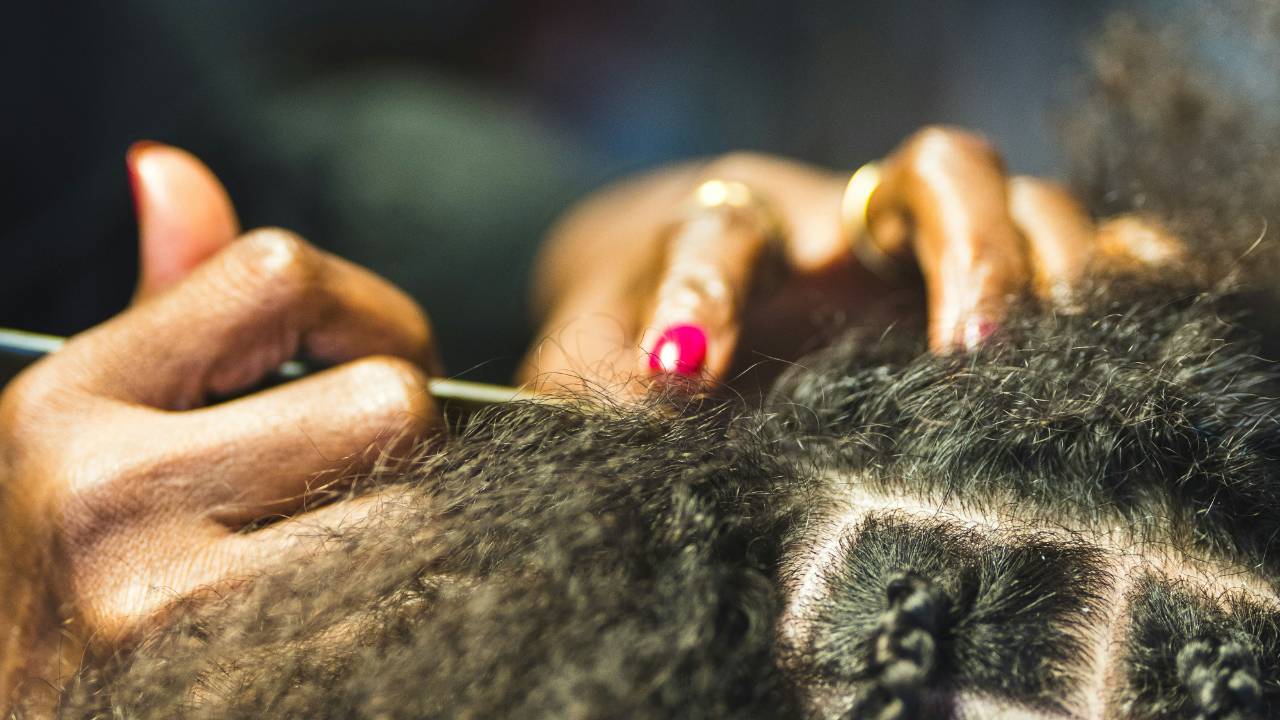
Caring for myself is not self-indulgence. It is self-preservation, and that is an act of political warfare. –– Audre Lorde
One is not born, but rather becomes, a woman. –– Simone de Beauvoir
Philosophy and psychology were my first loves long before I ever entered the world of Industrial-Organizational (I/O) Psychology.
As a young student, I was captivated by the deep questions of human consciousness, meaning, and the inner mechanics of the mind.
When I entered my doctoral training at 20, that curiosity was channeled into the strict, hyper-rational parameters of institutional performance and organizational systems.
I then spent a decade tracking how humans change to serve corporate metrics. But my foundational love for the deep, unhurried currents of philosophy and psychological liberation never truly faded—it was simply waiting for the moment I chose to reclaim my own lens.
When I first started this path of reclamation, I identified broadly as a feminist. Beauvoir was one of my early doorways: the idea that womanhood is not a fixed script we are handed, but something we become.
But the more I read Black women’s literature, and the more I immersed myself in Indigenous teachings, the more I realized there were critical elements missing from the mainstream narrative.
The profound thought leadership of Black women—Audre Lorde, Patricia Hill Collins, bell hooks—and the sacred, reciprocal Mother Earth lens of Indigenous elders were the elements I needed to expand my perspective on what it truly means to flourish in a body like mine. I refer to that medley of worldviews as Afro-Indigenous feminism.
For the purposes of this blog, here is how I define it:
Afro-Indigenous feminism is an alternative to Eurocentric feminism that looks beyond patriarchy as the sole locus of oppression, integrating race, class, and colonial history as foundational obstacles to human flourishing—and that centers the body, the land, and ancestral knowledge as living sources of intelligence.
This expanded view of my own Afro-Euro-Taína feminine body allowed me to see myself beyond the marginalization I had learned to exist in. It opened up my perspective on the beauty of being in this form, and the brilliance that the lineages that created me brought to the world.
Returning to artistry after I’d already been a scholar, a professional, and an expert forced me to see beyond the Eurocentric lens through which I’d learned to see human expression and brilliance.
In this blog, I’ll walk you through my exploration of multiple intelligences, how the arts have been defined through a Eurocentric lens, and how Afro-Indigenous feminist artistry—the everyday arts—allowed me to reclaim my body as a beautifully designed canvas.
Expanding the View of Human Intelligence
When I began my departure from traditional I/O psychology, it was sparked by a radical choice: I chose to stop infusing psychology and philosophy strictly into corporate productivity, and instead began deploying them in service of joy, individual sovereignty, and deep ancestral alignment.
To guide this multidimensional reclamation, I re-anchored my practice in Howard Gardner’s concept of multiple intelligences from my days as an undergraduate.
Many of us are conditioned to believe that human capability is a flat, singular score measured by academic credentials or our professional achievements.
But true human intelligence is inherently a plural, living ecosystem.
Gardner’s framework maps out seven foundational intelligences that shape how we process our existence. Below, I’ve kept his seven categories and translated each one through a liberatory lens.

| The Original Seven Intelligences | The Liberated Definition Through My Lens |
|---|---|
| 1. Linguistic | Language & Code. The capacity to use spoken or written words to structure thought and express complex meanings. |
| 2. Logical-Mathematical | Abstract Logic & Patterns. The ability to analyze problems logically, execute mathematical operations, and investigate scientific systems. |
| 3. Spatial | Volume, Geometry, & Dimension. The capacity to perceive, manipulate, and organize physical spaces and visual environments. |
| 4. Musical | Frequency, Rhythm, & Vibration. The skill in performing, composing, and appreciating musical tones, pitches, and structural tempos. |
| 5. Bodily-Kinesthetic | Somatic Motion & Coordination. The ability to use the physical body skillfully to solve problems, manipulate matter, and express raw emotion. |
| 6. Interpersonal | Relational Intelligence. The capacity to detect, interpret, and respond effectively to the motivations, feelings, and dynamics of other people. |
| 7. Intrapersonal |
Self-Sovereignty. The deep capacity to understand, heal, and cultivate your internal landscape, governing your life from a state of inner harmony. |
(Note: I will be diving into a standalone structural analysis of how each of these individual seven intelligences functions as a technology for self-healing and creative expression in a future blog.)
Gardner himself later added an eighth intelligence and proposed a possible ninth:
Naturalist Intelligence: The ability to recognize, categorize, and connect with elements of the natural environment—plants, animals, and weather.
Existential Intelligence (Proposed 9th): The tendency to contemplate deep or abstract questions about human existence, such as the meaning of life and death.
Gardner’s theory is still debated within psychology. It has never been validated as a measurable taxonomy the way IQ was designed to be. I don’t use it as a scoreboard. I use it as a lens—a way of seeing that intelligence was never as narrow as we were taught.
Existential intelligence in particular has greatly guided my life. It asks questions like: Why do we live? Why do we die? What is consciousness, and how do we make meaning of our place within the larger cosmos? I’ll return to these questions at the end of this blog, because this exploration gave me an answer.
When you fuse these diverse intelligences with an Afro-Indigenous feminist lens, you stop treating your body and your home as compliance checkboxes inside what Patricia Hill Collins calls the matrix of domination.
You realize that your nourishment, your very hair and skin, your spatial design, and your spiritual rituals are not incidentals of your being and expression—they are advanced, multidimensional intelligences engineered to help you thrive entirely on your own terms.
The existence of intelligences that describe how we relate to people, ourselves, nature, and existence is already a departure from the traditional way we define intelligence.
And if the way that we define intelligence expands beyond individual performance to the natural world (which includes humans), then the way that we define the art that can be created through those intelligences must also expand.
Arts Beyond the Eurocentric Lens
When I launched into my personal “Year 0” of artistic exploration, my mind naturally defaulted to what society had conditioned me to see as the mainstream arts: music, visual arts, performance arts, and literature.
I began by navigating the city infrastructure of Dallas, looking for where the creatives hung out, seeking out institutions, community workshops, and private art services.
As I moved through these spaces and became a beginner of the arts again, I learned that the mystery we perceive beneath the arts is actually organized, learnable structure.
Once a practitioner has a sense of the fundamentals of an art, expression becomes possible.
But the more I entered non-traditional spaces and explored other skills in my own life—cooking, makeup, fashion, crocheting—the more I realized that these were also arts.
Why weren’t they being defined as such? And what happens when we fail to see these expressions as forms of art?
More importantly, who is left out of the conversation when the arts are limited to the Fine Arts?
Here’s what I had to unlearn: you don’t need formal training to be an artist.
Much of the world’s artistry has never passed through a conservatory or a gallery.
It is passed down culturally, through traditions that survived colonization by living in people’s hands.
It is passed down familially, absorbed by watching the people who raised us.
And it is self-taught—though even self-teaching rests on resources that existed before you: the tutorial someone recorded, the tradition someone preserved, the library someone funded, the ancestor who survived long enough to pass something on. No artist is truly self-made.
And beyond any single craft, the way you choose to inhabit the places where you live and the body you were given is itself artistry, because no one else will ever express it exactly as you do.
To be clear, I’m not trying to redefine the Fine Arts.
I love them and continue to practice them deeply.
But I realized that if I limited my artistry strictly to that perimeter, I was still letting an external, Western report card dictate whether I was allowed to call myself a creator.
I’m not shrinking the definition of art. I’m expanding the umbrella so that humans of all colors can witness themselves as everyday artists.
With this expanded lens, I began seeing the arts of my own lineage—of the Black and Brown people who are highly skilled in expressing their intelligences in non-traditional ways—as my own relatable canon. A lineage I not only belonged to, but one that had been teaching me creativity long before I learned what “the arts” were.
The Science and Mathematics of Everyday Arts
This is where the massive, life-changing shift occurred.
I began looking at my own vision board—at the items I had placed there out of a pure desire to have a better relationship with my hair and to decorate my condo in a way that was beautifully conducive to my peace.
And as a researcher, I started studying the actual mechanics of these practices.
What I discovered blew my mind: every one of these everyday arts draws on real science—chemistry, physics, geometry, and the mathematics of proportion and ratio.
When you stand on the outside looking in, things like interior design, fashion, makeup, hair care, quilting, pottery, or cooking look like easy, intuitive hobbies. But they aren’t.
There are entire professional fields, academic degrees, and billion-dollar industries dedicated to them. For an everyday person to learn enough of the underlying mechanics to apply them to their own life—without outsourcing every aspect of their existence to a corporation—is an extraordinary intellectual and physical achievement.
Consider the material science embedded in these predominantly Black, Brown, and feminine spaces:
- The Art of the Crown (Type 4 Hair Care): Managing natural hair is a masterclass in material science and chemistry. You are caring for a keratin fiber, and you have to understand the relationship between hair density (how many strands grow per square inch), strand width (fine, medium, or coarse), porosity (how readily the cuticle lets moisture in and out), and the environment you’re in—humidity, heat, and hard water all change how your hair behaves. When I spend hours finger detangling and twisting my hair, I am reducing friction between strands, minimizing breakage, preventing single-strand knots, and protecting my length. Layering water for hydration and oils or butters to slow moisture loss is a chemical balancing act. Afro hair is not difficult; it is extraordinarily sophisticated.
- The Architecture of Sanctuary (Interior Design & Home Organization): Arranging a living space isn’t just about picking cute colors. It is the applied science of proportion, scale, light, color temperature, and circulation—the paths bodies take through a room. When I designed my condo, layering color and texture room by room, I was working with how light falls across surfaces and how a space feels to a nervous system coming home at the end of the day. Research in environmental psychology links clutter, lighting, and access to nature with stress and well-being. A home designed with intention can become a place where your body learns to rest.
- The Alchemy of the Hearth (Cooking & Nutrition): Interfacing with ingredients is applied chemistry. You are managing heat transfer, the browning reactions that build flavor, and the balance of salt, fat, and acid that makes a dish taste alive. How you pair fiber, protein, and fat shapes how steadily food releases energy into your body. When I cook, I am making dozens of these calculations by taste, smell, and memory—the way generations of women before me did without ever writing them down.
And here is the irony. When women do this work at home—especially Black, Brown, Indigenous, and working-class women—it is called intuition, a hobby, “just domestic.” When an industry packages the same knowledge and sells it back to us, it is called expertise.
The billion-dollar industries built on hair, beauty, food, and home are proof that this knowledge has always had value. The question is who gets credited, and who gets paid.
When dominant society dismisses these technical practices as mere “domestic crafts” or “beauty routines,” it is practicing a colonial erasure of the profound intellect woven into feminine and Indigenous lineages.
Reclaiming these spaces as high-fidelity arts is a major point of Afro-Indigenous feminism.
Conscious Adornment as Radical Nourishment
My sense of being an artist exploded the moment I expanded the definition of where artistry can exist. To me, living the life of an artist does not mean you have to spend half your day inside a mainstream gallery or a classical studio.
If you are conscious and intentional in what you put together—the silhouette of your outfit, the design of your hair, the geometry of your living room, the plate of food you prepare—any intentional adornment of yourself or your world is a profound artistic act.
In our hyper-capitalist, patriarchal society, there is a weird, toxic conflation between beauty and narcissism.
We have been conditioned to feel shame for loving beauty, as if caring about our visual and spatial canvas makes us shallow. But that is an imperial lie.
Humans are drawn to beauty at a deep level. Across cultures, people tend to read symmetry, harmony, and vibrancy as signals of health and safety, which is part of why beauty soothes us. Loving beauty isn’t vanity. It’s one of the ways we sense that life is well.
This is where Audre Lorde’s words land for me. Caring for my hair, my home, and my plate is not self-indulgence. In a world that profits from convincing Black and Brown women that our natural materials are problems to be fixed, tending to them with knowledge and love is self-preservation.
I believe everyone is inherently creative, and I hope this expanded definition of the arts helps you re-evaluate the things you already do in your daily life, or the things you’re actively trying to learn. When approached as artistry, these crafts can help you feel like you belong to yourself and are capable of nurturing the body you were designed to have.
Nourishing yourself means learning how to understand, respect, and take care of the raw, beautiful materials that whatever creator you believe in gave you.

